Why the red region blinds — your theory, confirmed + the cause isolated
2026-06-28 · standalone three.js cloud port · measured on the real GPU (RTX 4070 Ti SUPER), your exact screenshot camera (pos 27485,41504,-5377 · yaw −77° · pitch −37°), frozen + phase-matched · every probe is a flagged debug param (the render default is unchanged).
Verdict: CONFIRMED (adversarial workflow, ~0.9 confidence — a genuine refute lens tested four alternatives and all four died). Both halves hold in pixels. Below is the evidence, then the cause isolated, then the fix it points to.
1. The darks come from in-cloud self-shadow — drag to see
Same camera, same cloud, frozen. Left of the handle = normal. Right = in-cloud self-shadow switched OFF (sk=0). Watch the green billows: their form is made of the puffs shading each other — kill it and they go flat white, like the red.
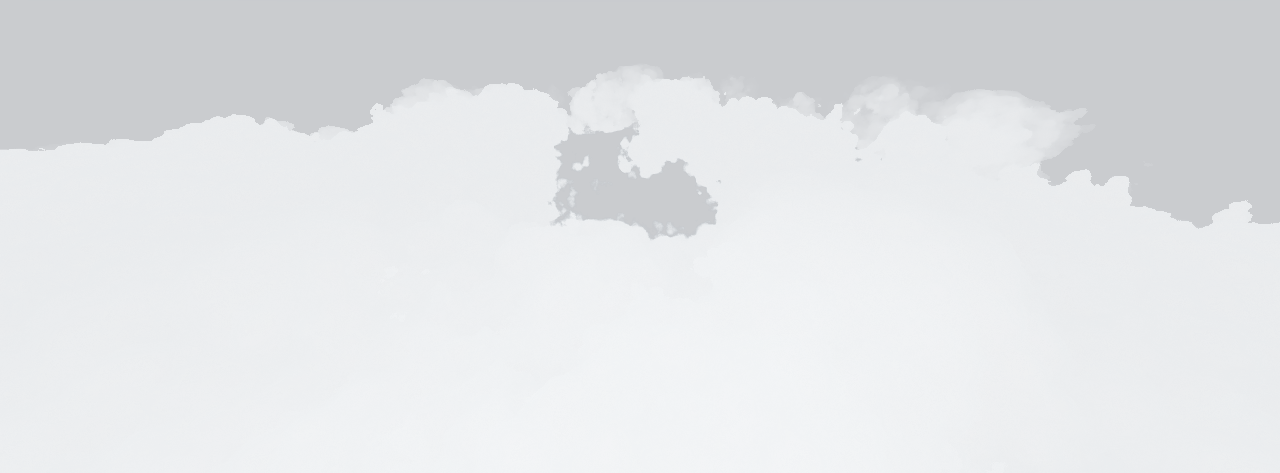
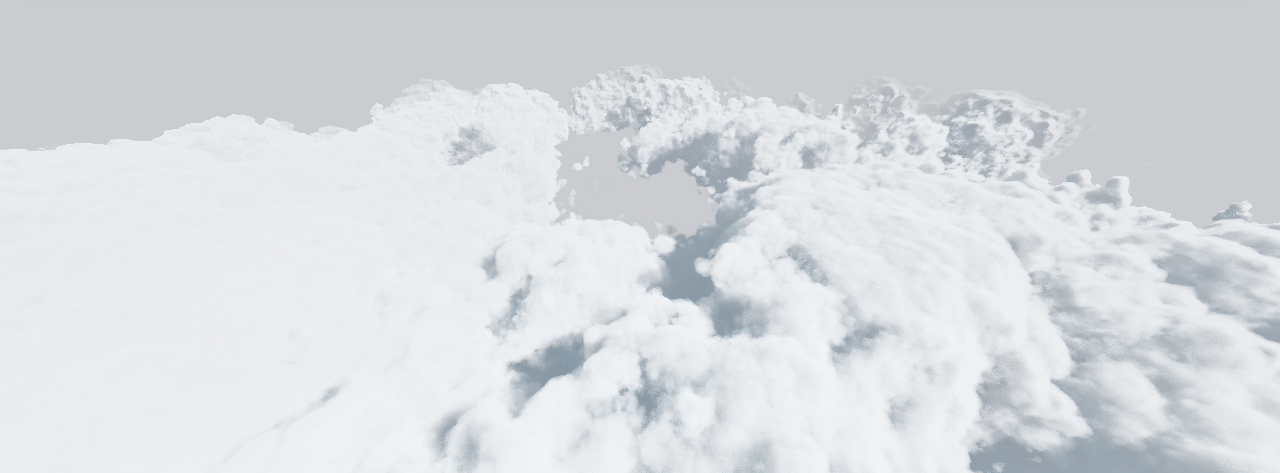
| region | normal — local contrast | self-shadow OFF | reading |
|---|---|---|---|
| GREEN clumped puffs | 6.0 (darks→156) | 0.6 (darks→240) | form collapses ~90% → the darks WERE self-shadow |
| RED flat merged mass | 0.9 | 0.5 | barely moves → it had almost no self-shadow to begin with |
2. The cause — red is a genuinely smoother, low-relief mass
To go past "it looks flat" and measure why, here is the surface relief itself — a depth map of where each ray first hits cloud (no lighting at all). Bumpy = clumped puffs; smooth = a merged mass.
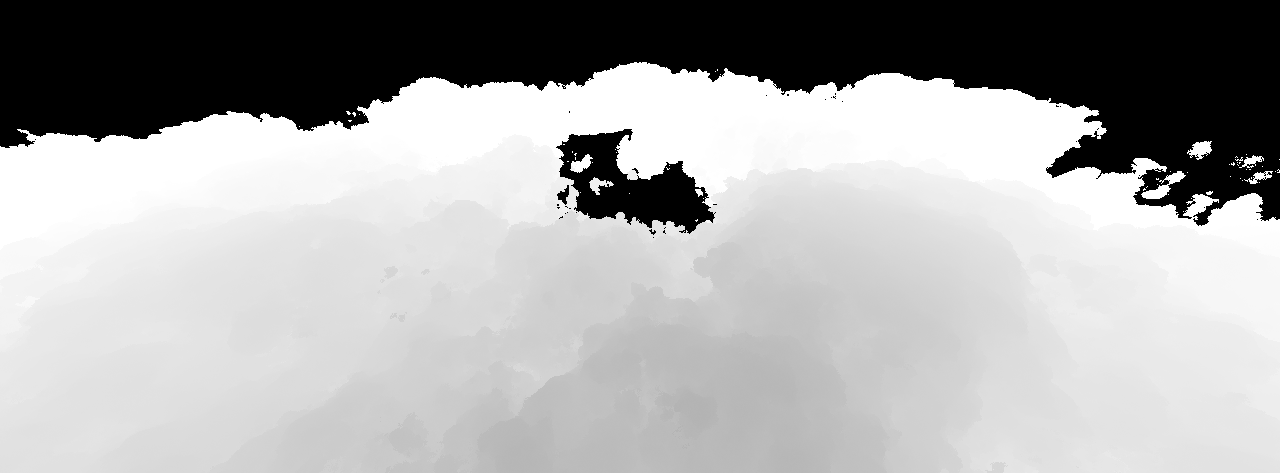
What it is — and what it isn't (controls, measured)
| candidate cause | test | result |
|---|---|---|
| Near-camera fade (A3) | disable it (noa3=1) | RULED OUT — byte-identical (the red mass is ~65k units away, far outside the ~800u fade zone) |
| LOD coarsening (far = less detail) | force full detail (lodpin=1) | MINOR — relief unchanged; lit form lifts only a little (red 0.9→1.3, green 6.0→8.2). Not the fix. |
| The coverage / noise field itself | the relief measurement above | THE DOMINANT CAUSE — red is a far, high-coverage, low-relief smooth region of the cloud function |
Honest nuance: the relief map measures the outer envelope; the full self-shadow gap also involves internal density heterogeneity (which the envelope understates). The direction is unambiguous — red is a smoother, higher-coverage mass — but the relief number is a floor, not the whole story.
3. Why no lighting knob can fix it (the math)
Tl = exp(−k·od), and the darks come from od varying between neighboring rays, not its average. A smooth merged mass returns near-identical od per adjacent ray → near-flat Tl → blinding white, no matter how hard you push the shadow dial. We proved this: deeper self-shadow (sk14) lifts green 6.0→7.3 but barely moves red (0.9→1.1). You cannot extract relief-shadow from a region that has no relief.
4. The fix it points to
Next: prototype the lobe-structure change behind a flag → measure that red's relief rises (this exact AOV) and its lit form follows → confirm it doesn't harm the green billows → two neutral teams → your eye. The real red fix, properly.
The other track (still standing)
The earlier contrast page recommendation — sk14 deeper self-shadow — still holds for everywhere clumping already exists (your green billows: +31% form). That's the quick win on the clumped regions; this density work is the fix for the merged masses. Two tracks, both real.
Method: qa/tools/_theory-cap.mjs + _density-cap.mjs (his-camera frozen + the relief AOV / lodpin / noa3 probes) · cd-twin/tools/features.py (relief + local contrast) · adversarial Workflow (confirm/refute/math) · this page. Your theory + its confirmation are logged as cd-twin record 0008. The CD's eye is the verdict — this is a pre-screen.